Oregon Revenue Forecast Adds $245 Million for Kotek’s Next Budget, but No Kicker in Sight
Oregon’s economy is holding steady, the state’s top economists told lawmakers on Wednesday, and the latest quarterly forecast hands Gov. Tina Kotek roughly $245 million more than expected to work with as she finishes her next two year budget proposal, due by Dec. 1.
The Economic and Revenue Forecast from the Office of Economic Analysis, presented to the House and Senate revenue committees on Nov. 18, is the last one before Kotek releases her recommended budget for the biennium that runs from July 2027 to June 2029.
“No news” is the headline
Chief Oregon Economist Carl Riccadonna was blunt about how little has changed since the August forecast. “The overarching theme of this forecast is: no news,” he told reporters in a briefing Tuesday evening, according to OPB. The numbers, he said, largely confirm his earlier call that the state’s economy was picking up steam.
Riccadonna pointed to healthy consumer spending, accelerating corporate profits and rising business investment in equipment as the forces keeping both the state and national economies afloat. He described a “thaw” in the “labor market malaise that has been entrenched for the last several quarters,” with hiring speeding up and job openings growing, the Salem Statesman Journal reported. Oregon’s unemployment rate slipped to 5.0% in September from 5.1% in August, still above the national rate of 4.2%.
The economists put the odds of an Oregon recession over the next year at 18%, unchanged from August. Risks they are watching include tightening financial conditions, energy shocks tied to elevated energy prices and the possibility that the Federal Reserve has to “slam on the brakes” to tame inflation.
Where the extra money comes from
The bulk of the upgrade traces back to a familiar source: Oregon’s wealthiest households. Senior state economist Michael Kennedy said taxes on corporate dividends, capital gains from selling assets such as stock, and retirement disbursements are coming in stronger than projected. Personal income tax projections for the next biennium rose by $288 million, driven entirely by those wealth related gains, according to the Statesman Journal, and projected General Fund revenues for 2027 to 2029 climbed by about $233 million.
“We’re continuing to see these come in higher among the higher income households than we were thinking even a quarter ago,” Kennedy said, per OPB. He also cautioned that the trend cannot last forever. “When we’ve seen these types of booms in the past… they have been followed by corrections. What goes up must come down.” Neither economist could say when.
For the current budget, which ends June 30, the change is small. The forecast adds about $11 million, lifting General Fund revenue to $37.9 billion and the projected ending balance to $411 million, near the $472 million balance assumed when lawmakers wrote the budget in 2025, the Oregon School Boards Association noted. Kennedy warned that the spring tax filing season could still move the numbers. “We’ve seen big changes in tax seasons before,” he said.
No personal kicker, but schools may gain
Oregonians should not count on another personal “kicker” rebate. The state’s unusual law returns money to taxpayers when revenue beats the close of session estimate by at least 2%, but the forecast shows personal income and other non corporate revenue sitting $524 million below that threshold.
Corporate taxes are a different story. Collections are running just above their own threshold, which would send about $71 million in excess corporate income and excise taxes to K through 12 education rather than back to businesses, if the forecast holds. The economists estimate that recent federal and related state tax law changes cut corporate taxes by $191 million, so the surplus would otherwise have been much larger.
Familiar battle lines in Salem
The reaction in the Capitol split along predictable lines. House Republican Leader Lucetta Elmer of McMinnville said the reliance on wealth gains should temper Democrats’ spending plans. “We cannot build a responsible state budget around a strong stock market and hope it lasts,” Elmer said in a statement, “and we cannot expect families and businesses to choose Oregon if we continue making it more expensive to live and work here.”
Senate Majority Leader Anthony Broadman, a Bend Democrat, read the same report as a sign of stability. “Today’s forecast shows that Oregon has both stability and potential, and our mandate as leaders is to promote economic development that pays off for everyone,” he said. “Working families deserve to share in the gains, life’s essentials must get more affordable, and we have to make it easier for Oregonians to get ahead.”
The forecast lands as many Oregon institutions are under budget strain. Portland Public Schools, Salem Keizer and Tigard Tualatin are all planning school closures, and the forecast itself projects statewide school enrollment will decline by 69,500 students, or 12.9%, over the next decade.
What comes next
Kotek’s recommended budget, expected within the next two weeks, will be built on these numbers. It is not binding, but with Democrats firmly in control of the Legislature it is likely to set the direction for the 2027 session. Lawmakers will get one more update before they finalize spending: the next economic and revenue forecast is scheduled for Feb. 24, 2027. Additional coverage is available from The Oregonian/OregonLive.
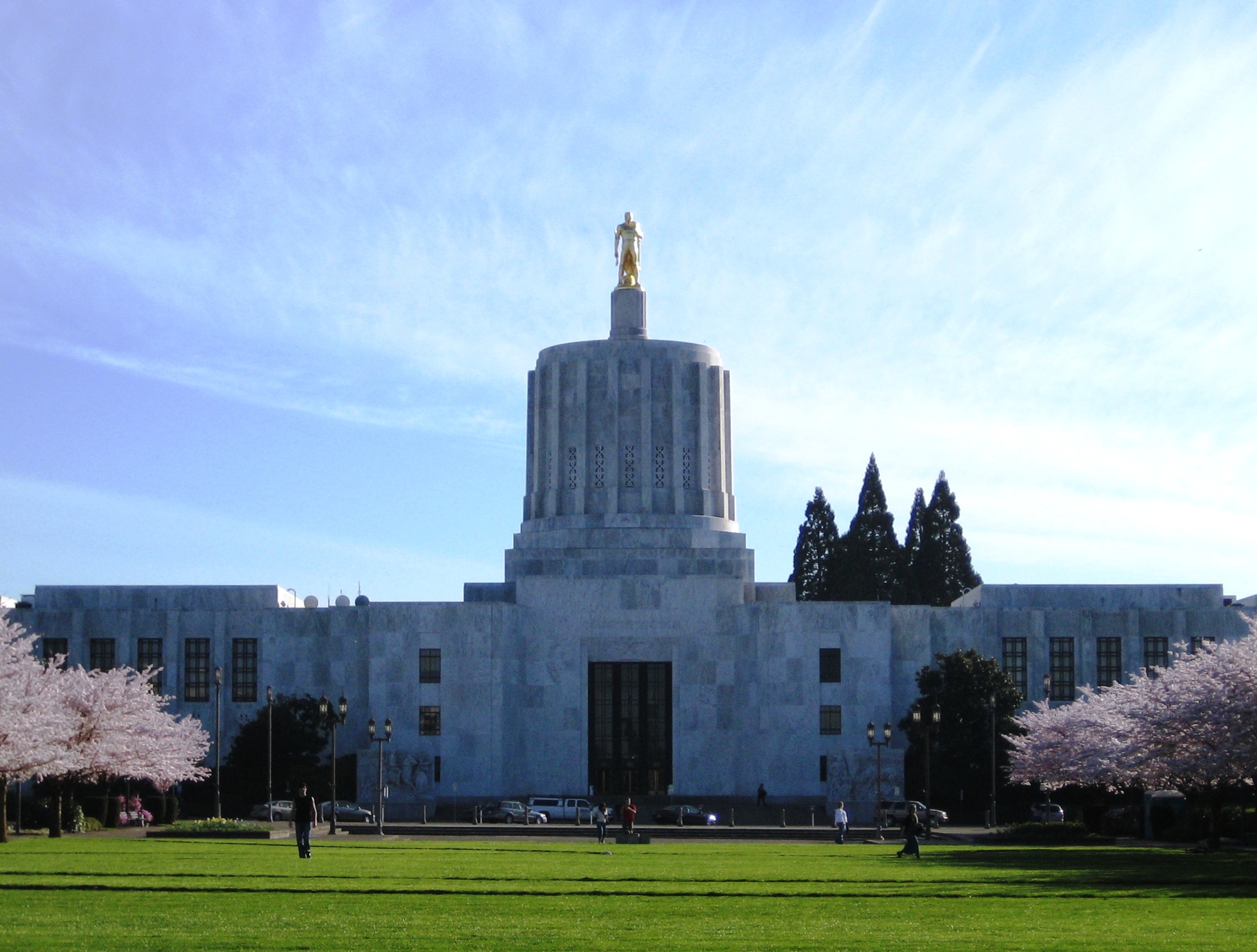
Featured image: The Oregon State Capitol in Salem. Photo by M.O. Stevens, via Wikimedia Commons, released into the public domain.