Forest Park Fight Heads Back to City Hall After Hearings Officer Approves PGE Plan to Cut More Than 370 Trees
Portland General Electric’s plan to string new power lines through Forest Park is alive again. A year after the Portland City Council rejected it, a city hearings officer has signed off on a revised version of the project, setting up another showdown at City Hall over one of Portland’s most cherished green spaces.
Hearings Officer Marisha Childs on Friday approved the utility’s revised proposal, which would cut down more than 370 trees on about 5 acres of the park to upgrade transmission lines, The Oregonian/OregonLive reported. According to the Northwest Examiner, the ruling grants an exception to the Forest Park Natural Resources Management Plan and allows the removal of 375 living trees and 18 dead ones, the permanent filling of two wetlands, impacts to two streams and disturbance to 4.7 acres of natural resource land.
What PGE wants to build
The work, known as the Harborton Reliability Project, would rewire an existing transmission line built in the 1970s and add a second line inside the utility’s existing right of way through the 5,200 acre park. PGE says the upgrade is needed to avoid potential power outages in North and Northwest Portland. The utility and renewable energy supporters have also argued the lines are needed to ease transmission bottlenecks and help Oregon meet its clean energy mandates.
Childs sided with PGE and city staff on the central questions. She found the work necessary to prevent outages as electricity demand grows, and concluded that no feasible alternative route exists that would cause less environmental damage. The revised plan would remove roughly the same number of trees as the original, though it includes changes meant to soften construction impacts.
$5.5 million and new conditions
The approval rests heavily on money. Under a mediation agreement the city and PGE reached in July, the utility will provide $5.5 million for environmental mitigation in or next to Forest Park, which is $3.1 million more than it promised in its original application. Childs concluded that PGE’s restoration work and the mitigation funds would offset the project’s impacts.
She also added strings. Childs required that a large share of the money be reserved for, and spent in, the part of the park where construction will happen. PGE must also conduct wildlife surveys before construction begins and follow timing restrictions to protect amphibians from the work.
The decision came on the timeline the city had promised. A public hearing was held Oct. 14, the record closed Nov. 4 and a ruling had been expected by Monday, Nov. 23, according to the city’s project page.
The “backroom deal” question
The road to Friday’s ruling has been contentious. A hearings officer approved PGE’s original plan in June 2025, but advocates appealed to the City Council, which rejected the project. The Northwest Examiner reported that the council vote against the plan was unanimous. PGE then appealed to the Oregon Land Use Board of Appeals before putting that case on hold to enter mediation with the city and three nonprofits: the Forest Park Conservancy, the Bird Alliance of Oregon (which is headquartered in Forest Park) and the Forest Park Neighborhood Association.
Some environmental groups called the resulting agreement a “backroom deal,” saying they were shut out of the final round of negotiations and that the deal offered too little money and too few other measures to make up for the damage. The Northwest Examiner reported that the settlement required the city to issue a favorable staff report on the new application.
Childs addressed those complaints only briefly. Arguments that the mediation agreement should be thrown out because it grew out of “backdoor dealings” or “pay to play” arrangements were, she wrote, “both outside the scope of the approval criteria and beyond the scope of the Hearings Officer.” She added that she had evaluated the revised proposal independently, on its merits.
Reactions and the next round
PGE welcomed the outcome. “PGE appreciates the hearings officer’s decision, which reflects a thorough and reasoned review of our application, staff’s report and all testimony and evidence from PGE, city staff, intervenors and others,” spokesperson Andrea Platt said in an email to The Oregonian.
Opponents were unsurprised and already looking ahead. “Nothing in the decision is a surprise. We anticipate Forest Park Conservancy will appeal the decision to the City Council,” said Carole Hardy, a board member of the conservancy. Northwest District activist Bob Weinstein called the ruling “a win for PGE, a loss for Forest Park,” the Examiner reported.
Any appeal must be filed with the City Council by Dec. 4. That would put the decision in front of a council that killed the earlier version of the project after a wave of public opposition, with thousands of people submitting written testimony or testifying in person last year. This time, though, councilors would be weighing a plan that city staff backed, that carries more mitigation money and that a hearings officer has found meets the city’s approval criteria.
For Portlanders, the stakes are familiar ones: how much of a cherished natural area the city is willing to trade for a more reliable grid, and who gets a seat at the table when that trade is negotiated. The answer now returns to elected officials, likely before the end of the year.
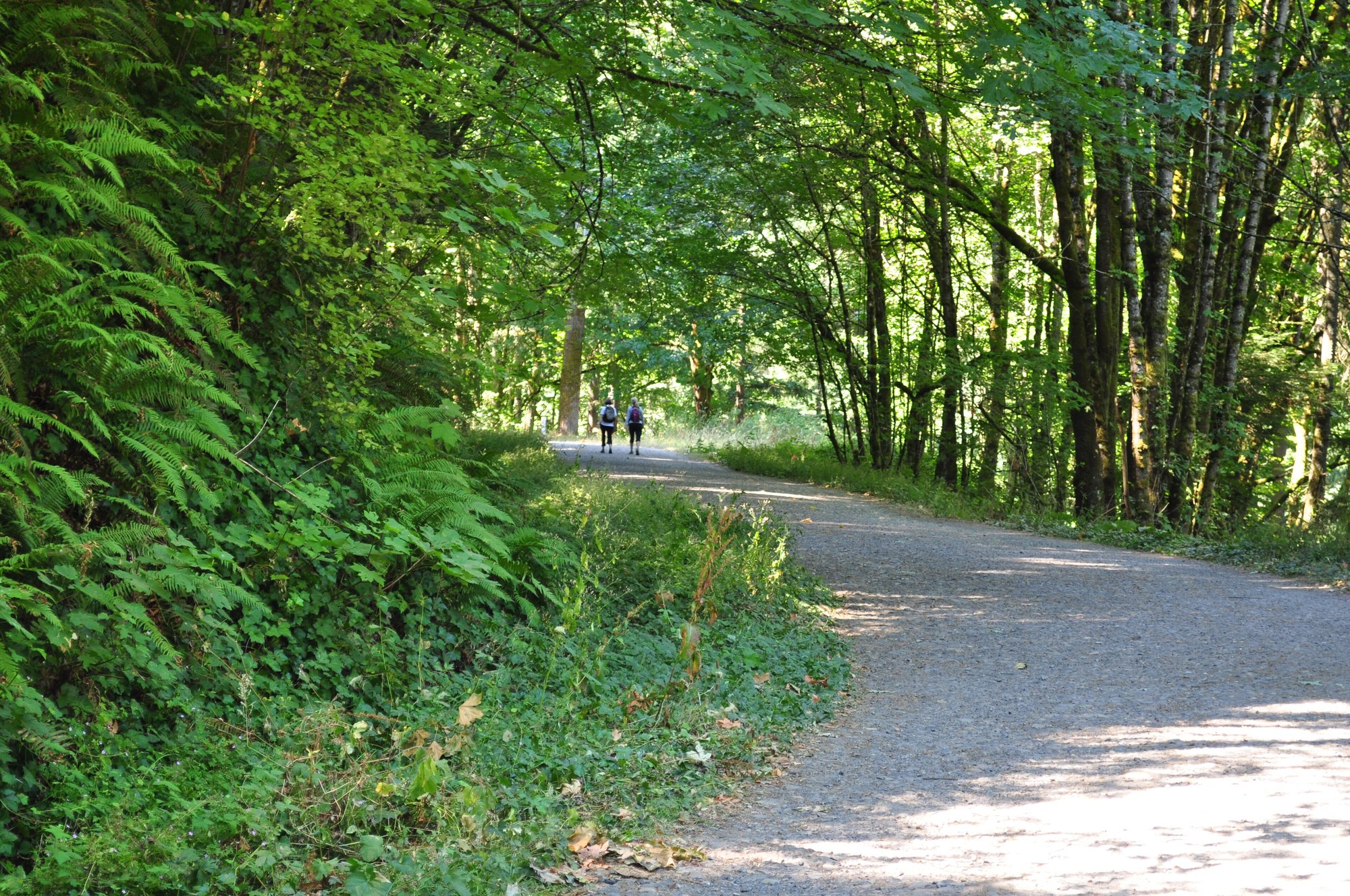
Featured image: Leif Erikson Drive in Forest Park, Portland, Oregon. Photo by Joe Mabel, via Wikimedia Commons, licensed under CC BY-SA 3.0.