Oregon’s Universal Health Care Blueprint Would End Premiums and Deductibles, but Lean on New Payroll and Income Taxes
Oregon now has a detailed, if still unfinished, map for replacing private health insurance with a single statewide plan. The Universal Health Plan Governance Board, a volunteer panel created by the Legislature, delivered an 89-page report to lawmakers on Monday, Nov. 23, laying out how the state could cover every resident with no monthly premiums and no deductibles, paid for mainly through a new employer payroll tax and an income-based household contribution.
The board says the system would cost less than what Oregonians collectively spend on health care today, and that about 80% of residents would pay less than they do now. The report lands as lawmakers prepare for the 2027 session and as new federal Medicaid work requirements threaten coverage for as many as 600,000 people on the Oregon Health Plan by July, KGW reported.
“Oregon has led the nation in health care innovation for decades, yet our system remains fragmented, increasingly expensive, and deeply inequitable,” said Dr. Helen Bellanca, the board’s chair, in a statement. “This framework shows how Oregon can replace that system with one where everyone is covered, costs are predictable and easier to control, and people contribute according to their income.”
What the plan would cover
Eligibility would be based on residency, not employment, so people would no longer lose coverage when they change or lose a job. Benefits would be modeled on those offered to Oregon public employees, with added behavioral health, dental, vision and hearing coverage, according to KTVZ. Patients could see any participating provider, with no insurance networks and no balance billing. Minimal cost sharing could still apply in limited cases, such as emergency room visits and specialty medications.
The plan would not be run by a state agency. Instead, it would be administered by a nonprofit public corporation modeled on SAIF, the state’s workers’ compensation insurer. By 2032, the board projects it would cover about 340,000 more people than are insured under the current system. The Oregon Health Authority estimated that 97.3% of Oregonians had coverage in its most recent survey in 2024, the Statesman Journal reported.
The price tag
The board estimates a universal plan would cost about $77.7 billion a year, compared with an estimated $78.3 billion under the status quo. Once fully established, it projects savings of $3 billion to $6 billion a year by 2032, or roughly 5% to 9% below the current system. With additional cost savings factored in, the 2032 cost could fall to $66.2 billion. Either way, the state would need to raise roughly $30 billion to $33 billion that existing federal and state funding would not cover.
The report offers five funding scenarios. All rely primarily on an employer payroll tax and what the board calls a “household health care contribution,” effectively a new personal income tax tied to ability to pay. Some versions also tap higher corporate income taxes, the corporate activity tax (which currently funds the Student Success Act) and the statewide lodging tax.
Household contributions would begin above either 138% or 200% of the federal poverty level, depending on the model, and would be levied in two, five or six brackets. Top rates range from 7.9% to 13.5% in the two-bracket models, 11.7% in the five-bracket model and 10.4% in the most progressive, six-bracket version. “A broad tax base with few exemptions is easier to explain and administer, and it can support lower overall tax rates,” the report says, while warning that such an approach “may increase the burden on lower income households.”
Who pays more, who pays less
The report’s examples show how the burden would shift. A two-person household earning $110,000 a year currently pays an estimated $4,700 annually for employer-provided coverage. Under four of the five models, it would pay less than that, and its employer would pay about $9,000 instead of $16,700. (The example assumes a private employer with Oregon’s median payroll of $8.5 million a year.)
The math changes higher up the income scale. A household earning $170,000 would pay between $6,634 and $10,357 depending on the model, compared with $4,700 today, while its employer would still pay less. Households at $220,000 could pay two or three times what they pay now, and only at that level would the employer’s cost rise, to $18,000 from $16,700.
The board is candid that savings would not arrive on their own. “Realizing these savings would require significant interventions, including renegotiating provider payments to account for their lower administrative costs, consolidating pharmaceutical purchasing, and creating a system for better oversight of quality and fraud,” the report says.
A long road from the ballot
The effort traces back to Measure 111, which voters narrowly approved in November 2022, amending the state constitution to require the state to ensure access to affordable health care. In 2023, lawmakers passed Senate Bill 1089, creating the governance board and directing it to design a universal plan.
The report was originally due in September. It sets no target date for launching the system. Instead, the board is asking the Legislature to fund a second phase of work, including public, business and industry input plus more economic analysis, and to pass one or two legislative packages to move the plan forward. Gov. Tina Kotek’s office did not immediately respond to the Statesman Journal’s request for comment.
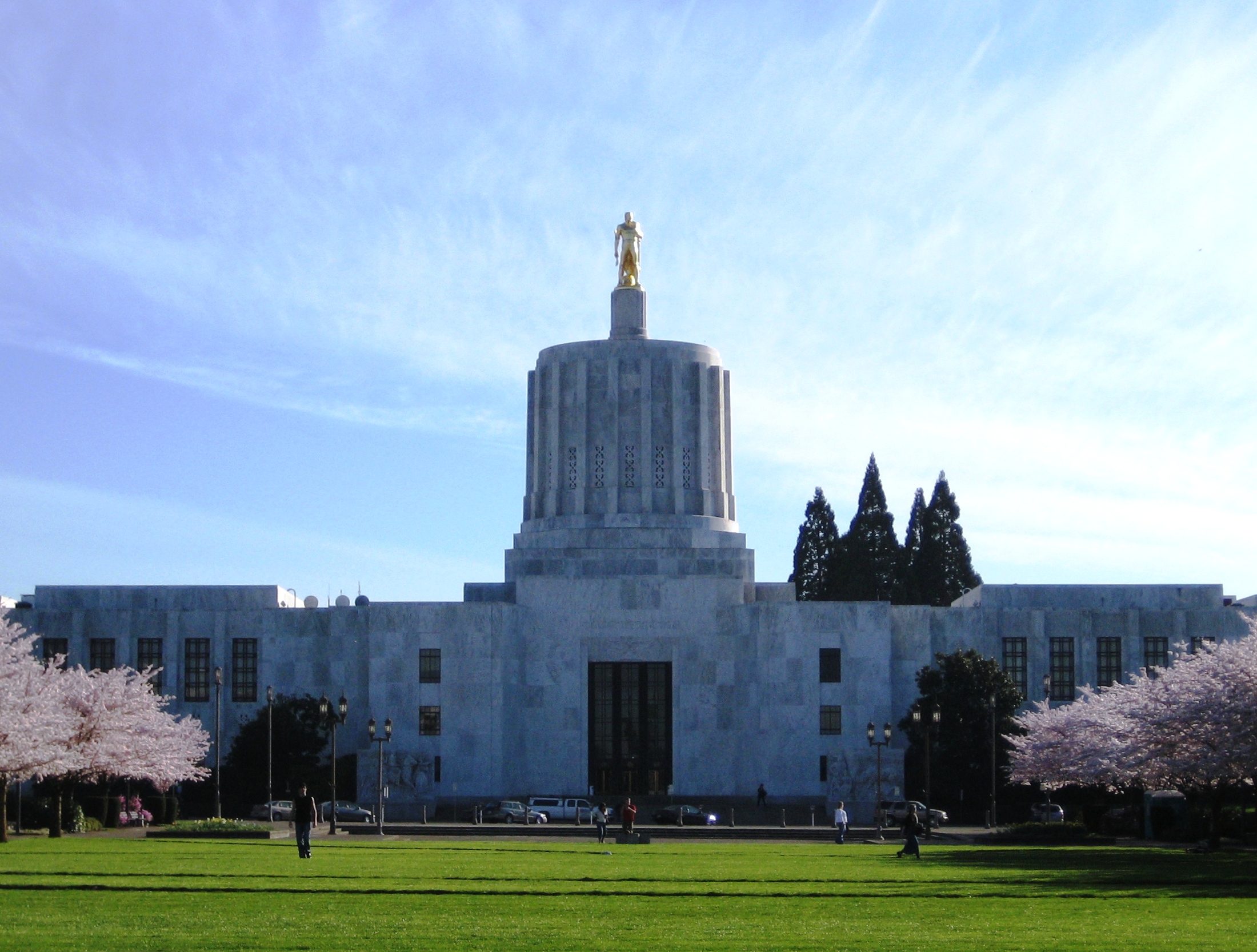
Featured image: Oregon State Capitol, Salem. Photo by M.O. Stevens via Wikimedia Commons, public domain.