Portland’s Longest City Strike Nears a Health Care Cliff as a Second Union Sets a Dec. 4 Walkout
Hundreds of striking Portland city workers will lose their city-paid health insurance at the end of the month unless their union and the city reach a deal in a mediation session scheduled for Sunday, Nov. 29. And a second group of city employees has told Portland it will walk off the job on Dec. 4 if it does not get a contract first.
The City of Portland Professional Workers union, known as CPPW, has been on strike since Nov. 9. It represents roughly 800 analysts, program coordinators, communications officers, technology staff, emergency management planners and other administrative specialists, about 10% of the city’s workforce of some 7,500 people, according to The Oregonian/OregonLive. KGW reports it is already the longest city worker strike in Portland history.
The Nov. 30 deadline
Striking workers have not been paid during the walkout, but they have kept their city health coverage. That ends on Nov. 30 for anyone still on strike, the city said in an update posted Nov. 24.
The deadline drew a rare collective response from the City Council. Eight councilors (Angelita Morillo, Tiffany Koyama Lane, Steve Novick, Candace Avalos, Jamie Dunphy, Sameer Kanal, Elana Pirtle-Guiney and Mitch Green) signed a letter to Mayor Keith Wilson and City Administrator Raymond Lee asking them to keep benefits in place into December. Councilors Eric Zimmerman, Olivia Clark, Dan Ryan and Loretta Smith did not sign.
“Loss of coverage does not just affect striking employees,” the councilors wrote. “It can leave kids without care, interrupt medical treatment, jeopardize access to necessary prescriptions, and expose employees and their enrolled dependents to substantial financial risk. Such risk should not be a factor in ongoing labor negotiations.”
Wilson and Lee answered the next day with a letter of their own. They pointed to language in CPPW’s existing contract, which says city-paid benefits end “on the last day of the month in which an employee… is not working their regularly scheduled hours,” and to similar eligibility rules in the city’s benefits plan. They wrote that they lack the unilateral authority to waive those rules.
“We respect the right of employees to strike,” Wilson and Lee wrote. “At the same time, we have a responsibility to administer employee benefits fairly and consistently while upholding the City’s legal, contractual and financial obligations.”
The city says it warned CPPW’s president and legal counsel in writing on Nov. 6, three days before the strike began, that coverage would end Nov. 30 for members who stayed out into December. Workers who lose eligibility can buy continued coverage through COBRA, the federal program that lets people stay on an employer’s plan, though at their own expense and typically at much higher premiums.
One cushion workers did not have in past strikes: an Oregon law that took effect this year lets striking workers collect up to 10 weeks of unemployment benefits after a two-week waiting period.
Where the money talks stand
The dispute is over ongoing wage and cost-of-living increases. The union argues its raises are inequitable compared with other city labor contracts. The city says it does not have the budget for what CPPW is asking, and the two sides disagree about how to even calculate the cost of the competing packages, OPB reported.
At a Nov. 23 mediation session that ended without a deal, the city presented an updated proposal, according to KGW. It kept the city’s earlier wage offer of increases of up to 3.25% starting July 1, 2026, and up to 4% starting July 1, 2027, applied only to the first $130,000 of annual pay for higher earners. It also includes a one-time $1,910 payment for employees with at least 15 years of service and a commitment to negotiate pay and job classification changes when bargaining opens on the union’s next contract in 2027. The city said it had not received a response before the session ended. The median annual salary for CPPW-represented employees is about $110,000, according to city figures cited by The Oregonian.
CPPW says the walkout has delayed emergency planning, graffiti removal, payroll processing and community grant distributions. The city says services have continued with limited disruption and that about 95% of its overall workforce, and more than 30% of CPPW-represented employees, are not participating.
A second strike on the calendar, and one deal done
Portland City Laborers, a bargaining unit of the Laborers’ International Union of North America Local 483, has given notice it will strike beginning Dec. 4 if no agreement is reached. The unit represents roughly 700 to 750 maintenance workers, landscape crews and other employees in transportation, environmental services and parks, according to KGW and OPB. Like CPPW, the laborers want higher cost-of-living raises, and they are also seeking limits on outsourcing their work to contractors and the inclusion of seasonal workers in their contract. Mediation with that unit is scheduled for Dec. 1.
There was one sign of progress this week. On Nov. 23, the city reached a tentative agreement with LiUNA Local 483 Recreation after nearly 10 months of bargaining. That unit represents up to 1,400 people who staff community centers, pools, camps, teen and senior programs and some SUN Community Schools. “Our members look forward to being able to continue providing the excellent Rec programs and services that Portlanders and visitors love,” the union said in a statement reported by KGW. The city has not yet released the terms or a ratification timeline.
That leaves Sunday’s session as the last scheduled chance to settle the CPPW strike before coverage lapses, and the start of a week in which Portland could have two city unions on the picket line at once.
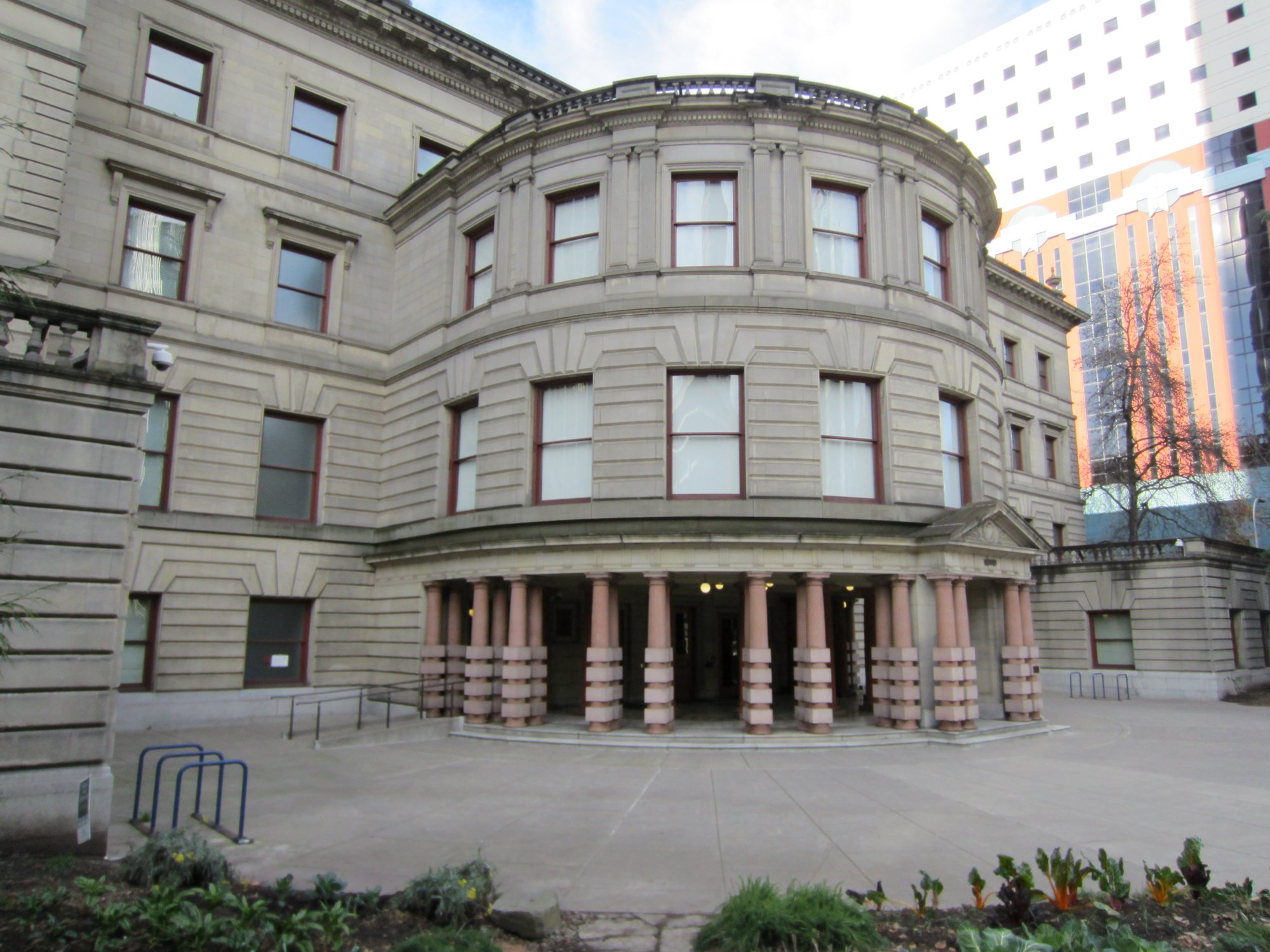
Featured image: Portland City Hall on SW Fourth Avenue. Photo by Another Believer via Wikimedia Commons, licensed under CC BY-SA 3.0.